

Top seller

Ledvance LED MR16 DIM P 5W 927 GU5.3
€5.84
*
incl. tax,
plus shipping costs
 Express delivery possible
Availability:
Delivery time: 3-5 days
Delivery time: approx. 3-5 days


OSRAM PARATHOM® DIM MR16 35 36 ° 5W/4000 K GU5.3
€6.10
*
incl. tax,
plus shipping costs
Availability:
Low stock; Delivery time: 1-3 days
Delivery time: approx. 1-3 days


OSRAM LED SUPERSTAR MR16 12 V 50 36 ° 8 W/2700 K GU5.3
€7.50
*
incl. tax,
plus shipping costs
Availability:
Delivery time: 3-5 days
Delivery time: approx. 3-5 days


OSRAM PARATHOM® MR16 20 36 ° 2.6 W/3000 K GU5.3
€4.38
*
Scale prices: from €4.24
incl. tax,
plus shipping costs
Availability:
Low stock; Delivery time: 1-3 days
Delivery time: approx. 1-3 days

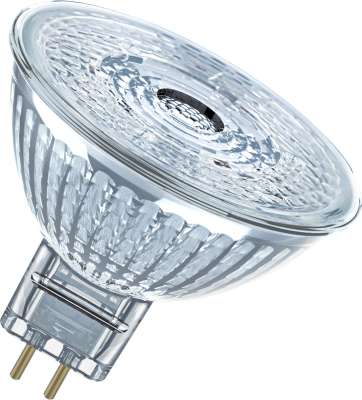
OSRAM LED STAR MR16 12 V 20 36 ° 2.6 W/2700 K GU5.3
€3.23
*
incl. tax,
plus shipping costs
Availability:
Delivery time: 3-5 days
Delivery time: approx. 3-5 days


LEDVANCE LED MR16 P 6.5W 830 GU5.3
€6.96
*
incl. tax,
plus shipping costs
Availability:
Low stock; Delivery time: 1-3 days
Delivery time: approx. 1-3 days


LEDVANCE LED MR16 P 3.8W 830 GU5.3
€4.51
*
incl. tax,
plus shipping costs
Availability:
Delivery time: 3-5 days
Delivery time: approx. 3-5 days

ISOLED MR16/GU5.3 socket ceramic 0-12V
€0.99
*
incl. tax,
plus shipping costs
Availability:
Delivery time: 3-5 days
Delivery time: approx. 3-5 days
62
Articles
No results were found for the filter!


OSRAM PARATHOM® MR16 20 36 ° 2.6 W/2700 K GU5.3
OSRAM PARATHOM® MR16 20 36 ° 2.6 W/2700 K GU5.3
Low-voltage LED reflector lamps MR16 with retrofit pin base. Product features: LED alternative to low voltage halogen lamps • High color consistency: = 6 SDCM • Not dimmable • Base:...
€4.06
*
incl. tax,
plus shipping costs
Availability:
Delivery time: 3-5 days
Delivery time: approx. 3-5 days
OSRAM PARATHOM® DIM MR16 35 36 ° 5W/4000 K GU5.3
OSRAM PARATHOM® DIM MR16 35 36 ° 5W/4000 K GU5.3
Dimmable low-voltage LED reflector lamps MR16 with retrofit pin base. Product features: LED alternative to low voltage halogen lamps • High color consistency: = 5 SDCM • Dimmable...
€6.10
*
incl. tax,
plus shipping costs
Availability:
Low stock; Delivery time: 1-3 days
Delivery time: approx. 1-3 days
OSRAM PARATHOM® MR16 20 36 ° 2.6 W/3000 K GU5.3
OSRAM PARATHOM® MR16 20 36 ° 2.6 W/3000 K GU5.3
Low-voltage LED reflector lamps MR16 with retrofit pin base. Product features: LED alternative to low voltage halogen lamps • High color consistency: = 6 SDCM • Not dimmable • Base:...
€4.38
*
Scale prices: from €4.24
incl. tax,
plus shipping costs
Availability:
Low stock; Delivery time: 1-3 days
Delivery time: approx. 1-3 days


Philips LEDspot ExpertColor 7.5-43W MR16 940 36D
Philips LEDspot ExpertColor 7.5-43W MR16 940 36D
Cap-Base: GU5.3 [ GU5.3] • Nominal Lifetime (Nom): 40000 h • Switching Cycle: 50000X • Technical Type: 7.5-43W • Light Technical • Color Code: 940 [ CCT of 4000K]...
€15.79
*
€13.37
*
incl. tax,
plus shipping costs
Availability:
Low stock; Delivery time: 1-3 days
Delivery time: approx. 1-3 days


OSRAM PARATHOM® MR16 35 36 ° 3.8 W/4000 K GU5.3
OSRAM PARATHOM® MR16 35 36 ° 3.8 W/4000 K GU5.3
Low-voltage LED reflector lamps MR16 with retrofit pin base. Product features: LED alternative to low voltage halogen lamps • High color consistency: = 6 SDCM • Not dimmable • Base:...
€4.60
*
€3.69
*
incl. tax,
plus shipping costs
Availability:
Delivery time: 3-5 days
Delivery time: approx. 3-5 days


OSRAM PARATHOM® PRO MR16 20 36 ° 3.6 W/2700 K GU5.3
OSRAM PARATHOM® PRO MR16 20 36 ° 3.6 W/2700 K GU5.3
Dimmable low-voltage LED reflector lamps MR16 with retrofit pin base. Product features: LED alternative to low voltage halogen lamps • High color consistency: = 3 SDCM • Dimmable...
€9.10
*
incl. tax,
plus shipping costs
Availability:
Delivery time: 3-5 days
Delivery time: approx. 3-5 days


Philips LEDspot ExpertColor 7.5-43W MR16 940 24D
Philips LEDspot ExpertColor 7.5-43W MR16 940 24D
Cap-Base: GU5.3 [ GU5.3] • Nominal Lifetime (Nom): 40000 h • Switching Cycle: 50000X • Technical Type: 7.5-43W • Light Technical • Color Code: 940 [ CCT of 4000K]...
€15.79
*
€13.50
*
incl. tax,
plus shipping costs
Availability:
Low stock; Delivery time: 1-3 days
Delivery time: approx. 1-3 days

OMNILUX MR-16 12V GU-5.3 3W LED green CR
OMNILUX MR-16 12V GU-5.3 3W LED green CR
Hot restrike • Operating voltage: 12 V • Nominal wattage: 3 W • Base: GU5.3 • Lamp type: LED lamp; clear lamp; low voltage lamp; Cool Beam lamp • Lamp specification: Hot...
€6.50
*
incl. tax,
plus shipping costs
Availability:
Delivery time: 3-5 days
Delivery time: approx. 3-5 days


OSRAM PARATHOM® MR16 20 36 ° 2.6 W/4000 K GU5.3
OSRAM PARATHOM® MR16 20 36 ° 2.6 W/4000 K GU5.3
Low-voltage LED reflector lamps MR16 with retrofit pin base. Product features: LED alternative to low voltage halogen lamps • High color consistency: = 6 SDCM • Not dimmable • Base:...
€4.38
*
incl. tax,
plus shipping costs
Availability:
Delivery time: 3-5 days
Delivery time: approx. 3-5 days
ISOLED MR16/GU5.3 socket ceramic 0-12V
ISOLED MR16/GU5.3 socket ceramic 0-12V
MR16/GU5.3 socket ceramic 0-12V Height: 10mm • Diameter: 17mm • Net weight: 5g • Socket: GU5.3 • Protection class: IP20 • Material: Ceramic • Incl. illuminant: No...
€0.99
*
incl. tax,
plus shipping costs
Availability:
Delivery time: 3-5 days
Delivery time: approx. 3-5 days


ISOLED MR16 LED spotlight 5.5W COB, 38°, warm white, dimmable
ISOLED MR16 LED spotlight 5.5W COB, 38°, warm white, dimmable
MR16 LED spotlight 5.5W COB, 38°, warm white, dimmable Length: 54mm • Diameter: 50mm • Net weight: 46g • Socket: GU5.3 • LED type: 1xCOB Sharp • Nominal voltage: 12V...
€13.41
*
incl. tax,
plus shipping costs
Availability:
Low stock; Delivery time: 1-3 days
Delivery time: approx. 1-3 days


ISOLED MR16 LED spotlight 5.5W COB, 70°, warm white, dimmable
ISOLED MR16 LED spotlight 5.5W COB, 70°, warm white, dimmable
MR16 LED spotlight 5.5W COB, 70°, warm white, dimmable Length: 54mm • Diameter: 50mm • Net weight: 48g • Socket: GU5.3 • LED type: 1xCOB Sharp • Nominal voltage: 12V...
€13.41
*
incl. tax,
plus shipping costs
Availability:
Not in stock
Delivery time: approx. 2 weeks
Delivery time: approx. 2 weeks
Delivery time: approx. 2 weeks


ISOLED MR16 LED spotlight 6W GLAS-COB, 70°, warm white, dimmable
ISOLED MR16 LED spotlight 6W GLAS-COB, 70°, warm white, dimmable
MR16 LED spotlight 6W GLAS-COB, 70°, warm white, dimmable Length: 54mm • Diameter: 50mm • Net weight: 44g • Socket: GU5.3 • LED type: SQ8COB • Nominal voltage: 12V...
€13.41
*
incl. tax,
plus shipping costs
Availability:
Not in stock
Delivery time: approx. 2 weeks
Delivery time: approx. 2 weeks
Delivery time: approx. 2 weeks


ISOLED MR16 LED Spotlight 6W Glass diffuse, 120°, warm white
ISOLED MR16 LED Spotlight 6W Glass diffuse, 120°, warm white
MR16 LED Spotlight 6W Glass diffuse, 120°, warm white Length: 56mm • Diameter: 50mm • Net weight: 48g • Socket: GU5.3 • LED type: SMD2835 • Nominal voltage: 12V AC/DC...
€10.23
*
€7.72
*
incl. tax,
plus shipping costs
Availability:
Delivery time: 3-5 days
Delivery time: approx. 3-5 days


ISOLED MR16 LED Spotlight 6W Glass diffuse, 120°, neutral white
ISOLED MR16 LED Spotlight 6W Glass diffuse, 120°, neutral white
MR16 LED Spotlight 6W Glass diffuse, 120°, neutral white Length: 56mm • Diameter: 50mm • Net weight: 48g • Socket: GU5.3 • LED type: SMD2835 • Nominal voltage: 12V...
€10.23
*
€8.50
*
incl. tax,
plus shipping costs
Availability:
Delivery time: 3-5 days
Delivery time: approx. 3-5 days


ISOLED MR16 full spectrum LED spotlight 7W COB, 36°, 2700K, dimmable
ISOLED MR16 full spectrum LED spotlight 7W COB, 36°, 2700K, dimmable
MR16 full spectrum LED spotlight 7W COB, 36°, 2700K, dimmable Length: 47mm • Diameter: 50mm • Net weight: 53g • Socket: MR16 • Nominal voltage: 12V AC/DC • Nominal...
€18.96
*
€13.50
*
incl. tax,
plus shipping costs
Availability:
Low stock; Delivery time: 1-3 days
Delivery time: approx. 1-3 days


ISOLED MR16 full spectrum LED spotlight 7W COB, 36°, 3000K, dimmable
ISOLED MR16 full spectrum LED spotlight 7W COB, 36°, 3000K, dimmable
MR16 full spectrum LED spotlight 7W COB, 36°, 3000K, dimmable Length: 47mm • Diameter: 50mm • Net weight: 66g • Socket: MR16 • Nominal voltage: 12V AC/DC • Nominal...
€18.96
*
incl. tax,
plus shipping costs
Availability:
Low stock; Delivery time: 1-3 days
Delivery time: approx. 1-3 days


ISOLED MR16 full spectrum LED spotlight 7W COB, 36°, 4000K, dimmable
ISOLED MR16 full spectrum LED spotlight 7W COB, 36°, 4000K, dimmable
MR16 full spectrum LED spotlight 7W COB, 36°, 4000K, dimmable Length: 47mm • Diameter: 50mm • Net weight: 66g • Socket: GU5.3 • Nominal voltage: 12V AC/DC • Nominal...
€18.96
*
incl. tax,
plus shipping costs
Availability:
Not in stock
Delivery time: approx. 2 weeks
Delivery time: approx. 2 weeks
Delivery time: approx. 2 weeks


ISOLED MR16 LED spotlight 3.5W, 270°, opal, warm white
ISOLED MR16 LED spotlight 3.5W, 270°, opal, warm white
MR16 LED spotlight 3.5W, 270°, opal, warm white Length: 44mm • Height: 44mm • Diameter: 50mm • Net weight: 32g • Socket: MR16 • Nominal voltage: 12V AC/DC...
€8.65
*
incl. tax,
plus shipping costs
Availability:
Delivery time: 3-5 days
Delivery time: approx. 3-5 days

Philips MASTER LED ExpertColor 6.7-35W MR16 927 36D
€22.29
*
€15.00
*
incl. tax,
plus shipping costs
Availability:
Delivery time: 3-5 days
Delivery time: approx. 3-5 days


OSRAM PARATHOM® DIM MR16 50 36 ° 8 W/4000 K GU5.3
OSRAM PARATHOM® DIM MR16 50 36 ° 8 W/4000 K GU5.3
Dimmable low-voltage LED reflector lamps MR16 with retrofit pin base. Product features: LED alternative to low voltage halogen lamps • High color consistency: = 5 SDCM • Dimmable...
€10.08
*
incl. tax,
plus shipping costs
Availability:
Delivery time: 3-5 days
Delivery time: approx. 3-5 days


OSRAM PARATHOM® MR16 20 36 ° 2.6 W/4000 K GU5.3
OSRAM PARATHOM® MR16 20 36 ° 2.6 W/4000 K GU5.3
Low-voltage LED reflector lamps MR16 with retrofit pin base. Product features: LED alternative to low voltage halogen lamps • High color consistency: = 6 SDCM • Not dimmable • Base:...
€5.04
*
incl. tax,
plus shipping costs
Availability:
Delivery time: 3-5 days
Delivery time: approx. 3-5 days
OSRAM LED SUPERSTAR MR16 12 V 50 36 ° 8 W/2700 K GU5.3
OSRAM LED SUPERSTAR MR16 12 V 50 36 ° 8 W/2700 K GU5.3
Dimmable low-voltage LED reflector lamps MR16 with retrofit pin base. Product features: LED alternative to conventional low voltage lamps • Dimmable (with many common dimmers, see also...
€7.50
*
incl. tax,
plus shipping costs
Availability:
Delivery time: 3-5 days
Delivery time: approx. 3-5 days
OSRAM LED STAR MR16 12 V 20 36 ° 2.6 W/2700 K GU5.3
OSRAM LED STAR MR16 12 V 20 36 ° 2.6 W/2700 K GU5.3
Low-voltage LED reflector lamps MR16 with retrofit pin base. Product features: LED alternative to low voltage halogen lamps • Mercury-free lamps • : Low energy consumption • Easy...
€3.23
*
incl. tax,
plus shipping costs
Availability:
Delivery time: 3-5 days
Delivery time: approx. 3-5 days